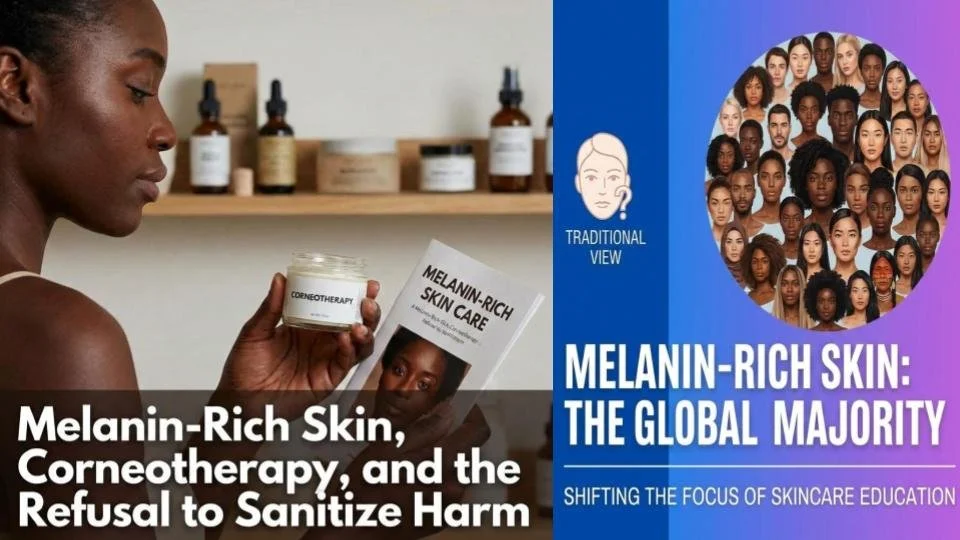
An essential perspective shift must be named clearly and without dilution: when we talk about melanin-rich skin, we are talking about the global majority. The overwhelming majority of the world’s population has melanin-rich skin, yet traditional skincare education, research, and clinical protocols have centered Eurocentric skin types as the default. This is not a neutral oversight, it is a systemic failure with lasting consequences.
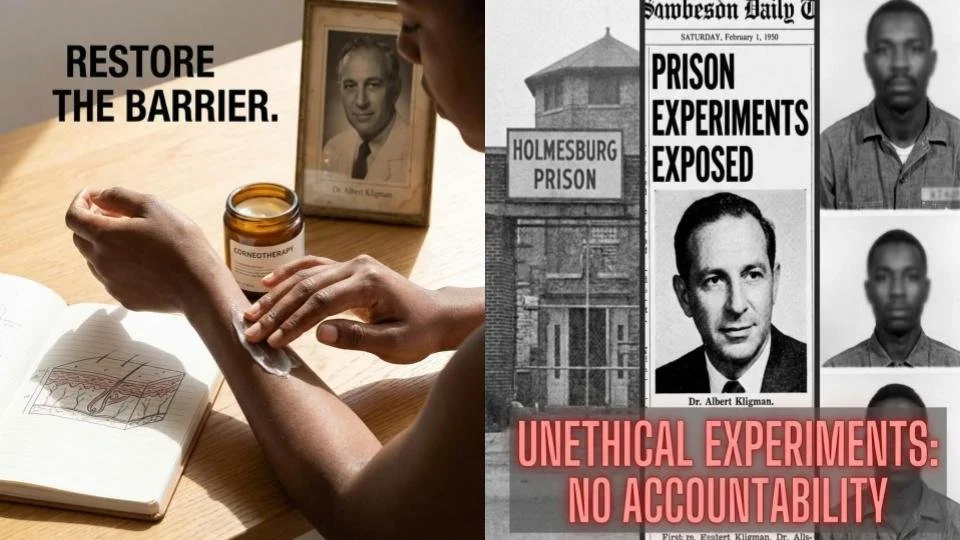
Corneotherapy represents a profound paradigm shift in how we understand skin health. Rooted in the work of Dr. Albert Kligman in the 1960s, corneotherapy reframed the stratum corneum not as inert tissue, but as a biologically active, intelligent system central to overall skin function. Its core principle, working from the outside in by restoring barrier integrity before addressing other concerns, is clinically sound and particularly relevant for melanin-rich skin. But scientific advancement does not exist outside of history. And history does not disappear because it makes us uncomfortable.
Between 1951 and 1974, Kligman conducted non-consensual experiments on incarcerated Black men at Holmesburg Prison in Philadelphia. These men were exposed to harmful substances without informed consent. These acts were violent, coercive, and exploitative. They were not ethical missteps, they were abuses of power enabled by racism and dehumanization. Kligman never took accountability. In fact, he publicly stated that ending human experimentation had been “a big mistake.”
This matters.

We cannot extract corneotherapy’s scientific contributions while sanitizing the violence that helped produce them. When we soften language, we soften accountability. When we erase coercion, we erase responsibility. And when responsibility disappears, the ongoing realities of racism-related stress, medical mistrust, anger, and collective grief stop making sense, especially to those who benefit from the erasure.
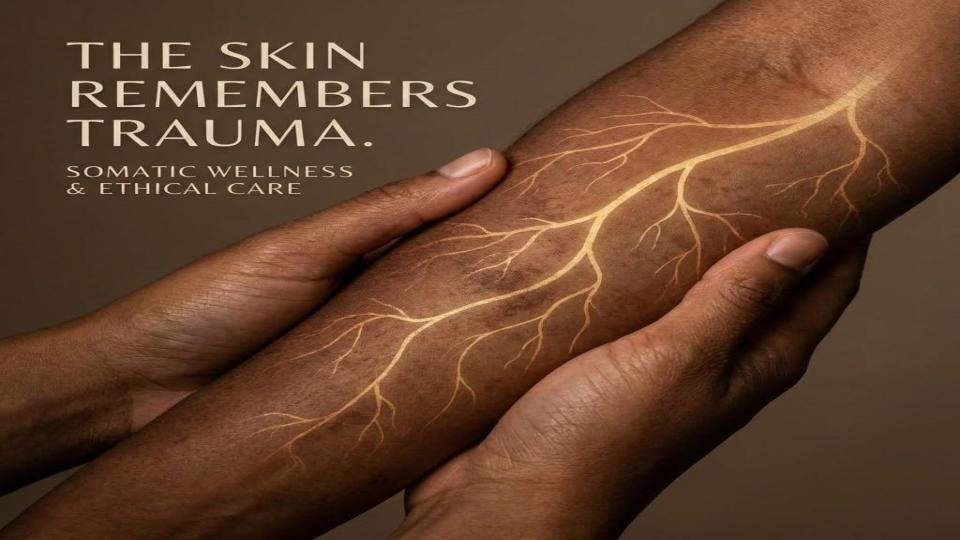
The skin remembers trauma. Our practices must remember history.
For practitioners treating post-inflammatory hyperpigmentation in global majority skin, this context demands more than technical competence. It requires ethical commitment. Melanin-rich skin responds differently to inflammation, barrier disruption, and stress physiology. Clinical observation, and lived experience, consistently shows that a compromised skin barrier amplifies inflammatory responses in melanin-rich skin. These inflammatory cascades do not simply trigger hyperpigmentation; they maintain it. Traditional protocols that aggressively suppress melanin while damaging barrier integrity create cycles of treatment and harm. They fail not because melanin is “difficult,” but because the barrier, and the body, were never centered.
Somatic wellness is inseparable from this conversation. Skin health reflects nervous system regulation. Chronic stress elevates cortisol, activates inflammatory pathways, and directly contributes to persistent hyperpigmentation. For global majority clients, this stress is not only individual, it is historical, cultural, and systemic. Our touch, our protocols, our language either acknowledge this reality or replicate harm through neglect.
Cultural competence, therefore, is not optional. It is essential clinical skill.
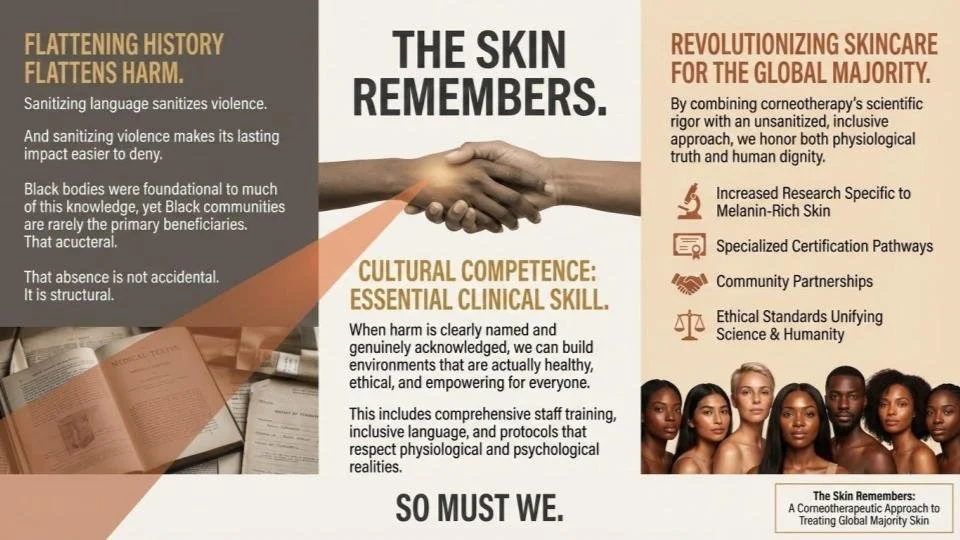
This includes acknowledging that research and product development have historically underserved melanin-rich skin, despite it representing the global majority. It means comprehensive staff training, culturally sensitive treatment environments, inclusive language and imagery, and protocols that respect physiological and psychological realities. It also means integrating traditional wellness practices from diverse cultures, not as trends, but as legitimate, often barrier-respectful approaches aligned with corneotherapeutic principles.
Flattening history flattens harm. Sanitizing language sanitizes violence. And sanitizing violence makes its lasting impact easier to deny.
What interests me most is not remaining trapped in history, but being honest enough about it to transform the present. When harm is clearly named and genuinely acknowledged, we can build environments that are actually healthy, ethical, and empowering for everyone. Without that clarity, even the most well-intentioned practitioners may still be met with distrust, not because of who they are individually, but because the system’s harm is so deep and unresolved.
I spent over fifteen years in training. I am double board certified. And no one ever told this story, that Black bodies were foundational to much of this knowledge, yet Black communities are rarely the primary beneficiaries of its application. That absence is not accidental. It is structural.
This is why I wrote - The Skin Remembers: A Corneotherapeutic Approach to Treating Global Majority Skin.
Because when barrier science meets cultural competence and whole-person care, practitioners, and clients, gain agency. These are the stories we must learn if we are to provide the kind of care people deserve.
As we look toward the future of inclusive esthetics, accountability must be paired with action: increased research specific to melanin-rich skin, specialized certification pathways, community partnerships, and ethical standards that refuse to separate science from humanity.
By combining corneotherapy’s scientific rigor with an unsanitized, inclusive, culturally competent approach, we can truly revolutionize skincare for the global majority, honoring both physiological truth and human dignity.
The skin remembers. So must we.